
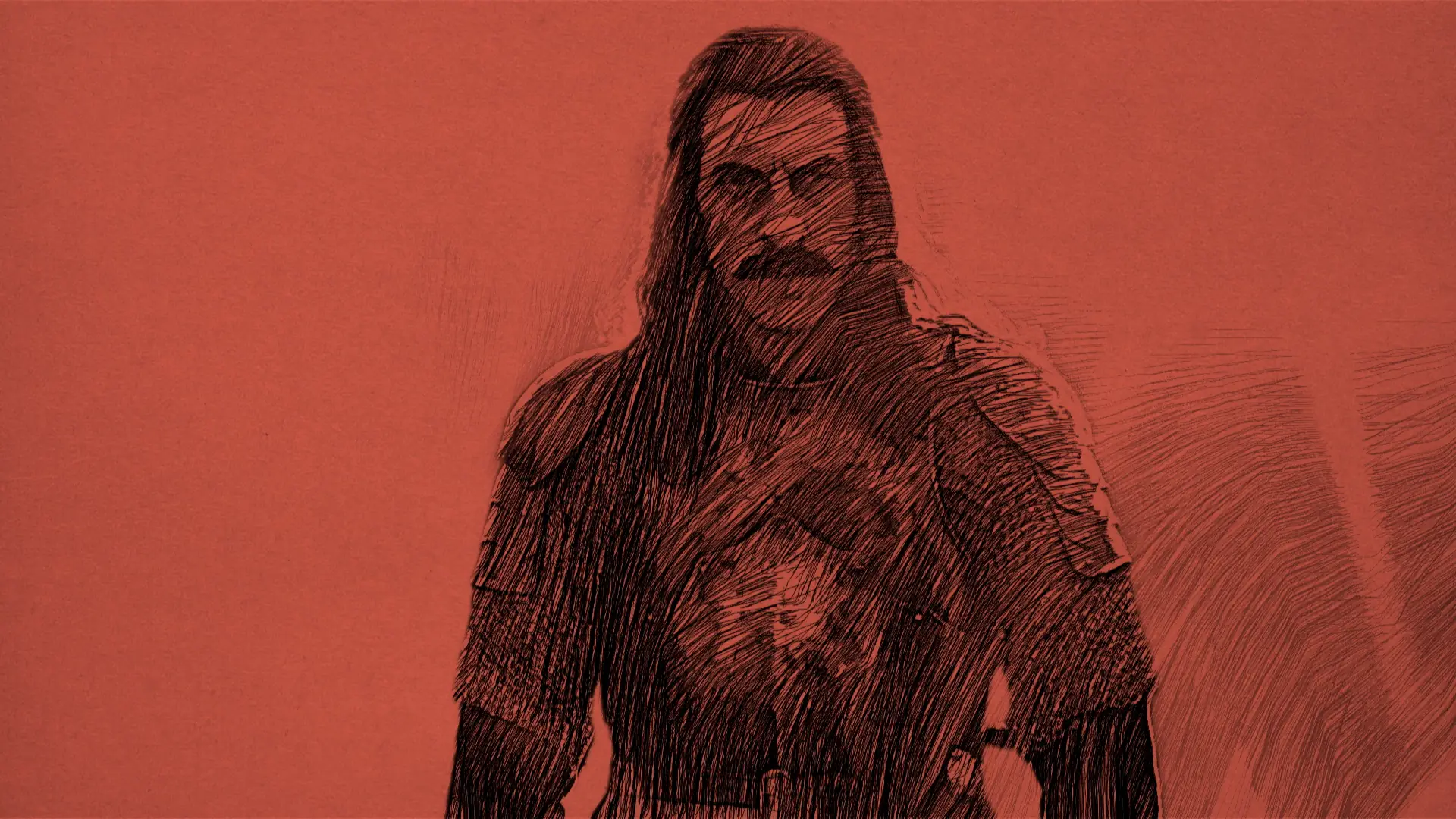
Few historical figures have been so thoroughly consumed by their own legend. Vlad III of Wallachia, the 15th-century prince whose name Bram Stoker borrowed for his immortal villain, was in documented reality a ruler of considerable political cunning, brutal military pragmatism and genuine historical consequence. Dracula’s True Story cuts through centuries of gothic embellishment to examine what the surviving sources actually tell us about this polarising prince.
Vlad III and the Crucible of Medieval Power
Wallachia in the 1450s was no peripheral backwater. Wedged between the expanding Ottoman Empire and the Kingdom of Hungary, which included Transylvania, it was a state perpetually on the edge of absorption. Vlad III, who ruled in three separate periods between 1448 and 1476, understood survival as an essentially violent business. His nickname, Dracula, means “son of Dracul”. It derived not from any supernatural menace but from the Order of the Dragon, a chivalric society into which his father, Vlad II, had been inducted by Sigismund, King of Hungary and later Holy Roman Emperor.
A Prince Shaped by Captivity
Vlad’s early life shaped his political worldview more than is often recognised. Held as an Ottoman hostage alongside his younger brother Radu during the 1440s, he observed first-hand the inner workings of Sultan Murad II’s court, where the future Mehmed II was also being raised. The experience left him both strategically literate and, by most historical accounts, deeply scarred. Whether it made him uniquely cruel or simply capable of cruelty when cruelty served a purpose remains genuinely contested among scholars.
The Impalement Campaign: Terror as Strategy
The practice that earned Vlad his most infamous epithet, Vlad Țepeș or “the Impaler”, is recorded in several contemporary sources, from Transylvanian Saxon merchants to Ottoman and Byzantine chroniclers. The Saxons, whose towns Vlad raided, had their own reasons to exaggerate the scale of his atrocities. Yet historians increasingly situate these acts within a recognisable medieval logic: the public, spectacular punishment of enemies and criminals as a deterrent, a display of sovereignty and a message to the Ottomans that Wallachia would not yield quietly. Horrifying by modern standards, certainly, but not without precedent in the brutal theatre of 15th-century statecraft.
A Turning Point in European History
The documentary draws on historical evidence to position Vlad not merely as a curiosity but as a figure at the intersection of momentous forces: the struggle to hold Christian Europe’s south-eastern frontier against Ottoman expansion. His 1462 campaign, including the audacious Night Attack at Târgoviște, in which he led a cavalry raid deep into the Ottoman camp in an attempt to kill Mehmed II himself, demonstrated genuine military ingenuity. It could not save his throne. Mehmed installed Vlad’s brother Radu as ruler of Wallachia that same year, and Vlad spent more than a decade in Hungarian captivity before returning briefly to power in 1476.

Where to Watch
- Watch on:
- Sunday, November 29
- 21:00 CET
- See the full TV schedule
FAQ: Vlad III and the Dracula Legend
Q: Was Vlad III the direct inspiration for Bram Stoker’s Dracula?
A: Stoker took the name from William Wilkinson’s 1820 account of Wallachia, but his notes suggest he knew little else about the historical Vlad III. Most scholars believe the novel drew far more on folklore and gothic tradition than on the real prince.
Q: How reliable are the historical sources on Vlad?
A: The main sources, German pamphlets based on Saxon accounts, Ottoman and Byzantine chronicles and diplomatic correspondence, each carry their own biases. Historians treat them carefully and cross-reference them where possible, which is why so much of Vlad’s story remains contested.